|
 |
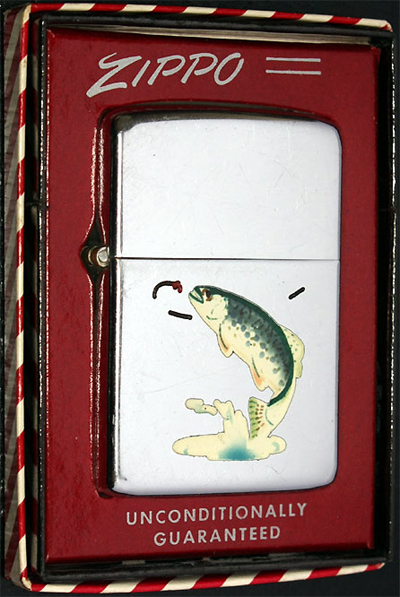
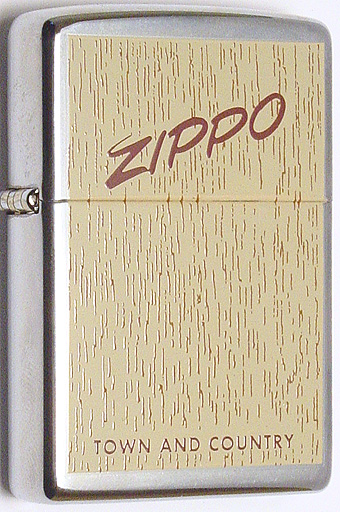
First offered in 1949, "town & country" employed a "paint on paint"
process to achieve its rich texture. The colors were airbrushed on
the lighter at a time after the surface was engraved at .004 inch
deep.
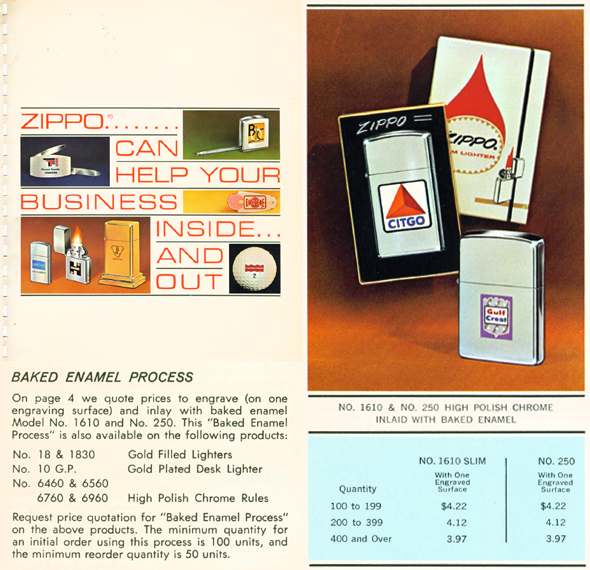
The backed enamel process then dried & hardened the
finish. A very time consuming production process which reflected,
in those days, an expensive price.
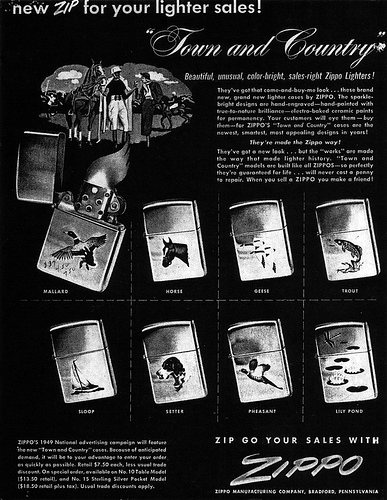
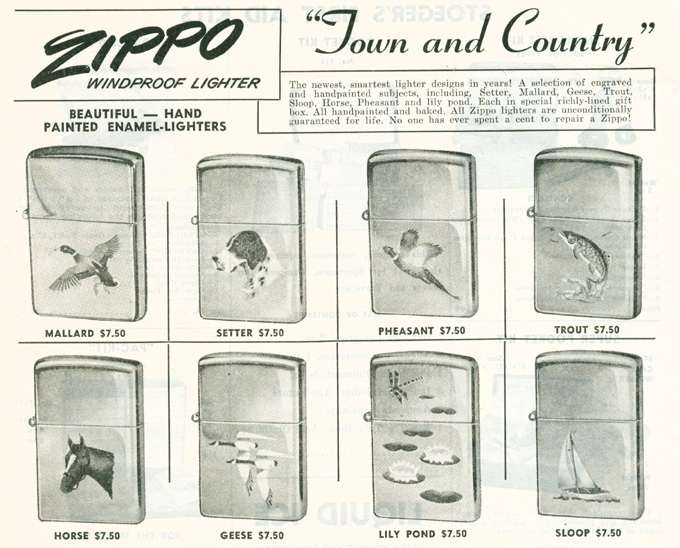
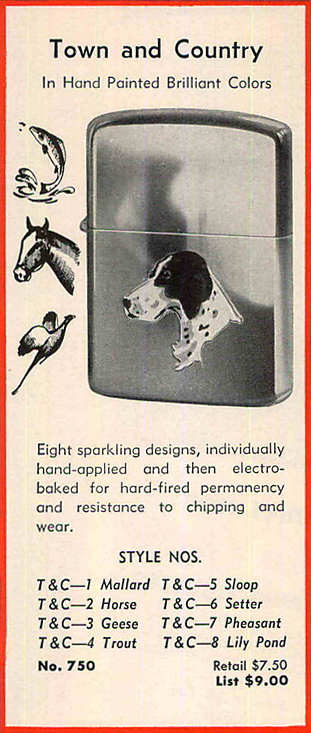
After having produced
some test samples in late 1947 & early 1948 that were sold by
salesmen the first classic series was introduced to the product
line in 1949 with eight different designs for US $7.50 retail each:
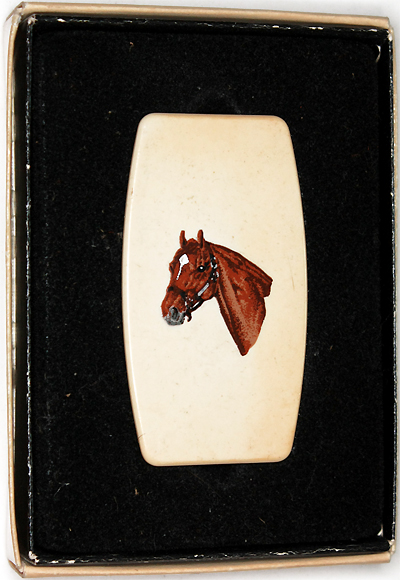
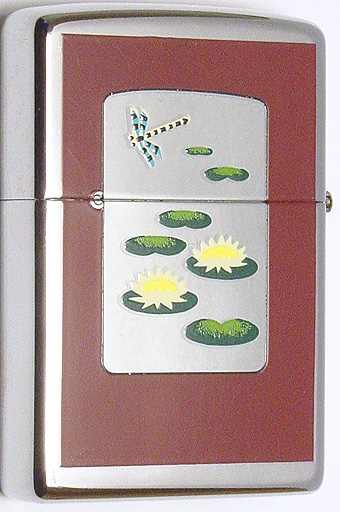
the mallard, the
horse, the geese, the trout, the sloop, the setter, the pheasant &
the lily pond.
All these designs were also available on the
2nd model Barcroft table lighter for US $13.50 each & on sterling
silver Zippo lighters for US $18.50 each. |
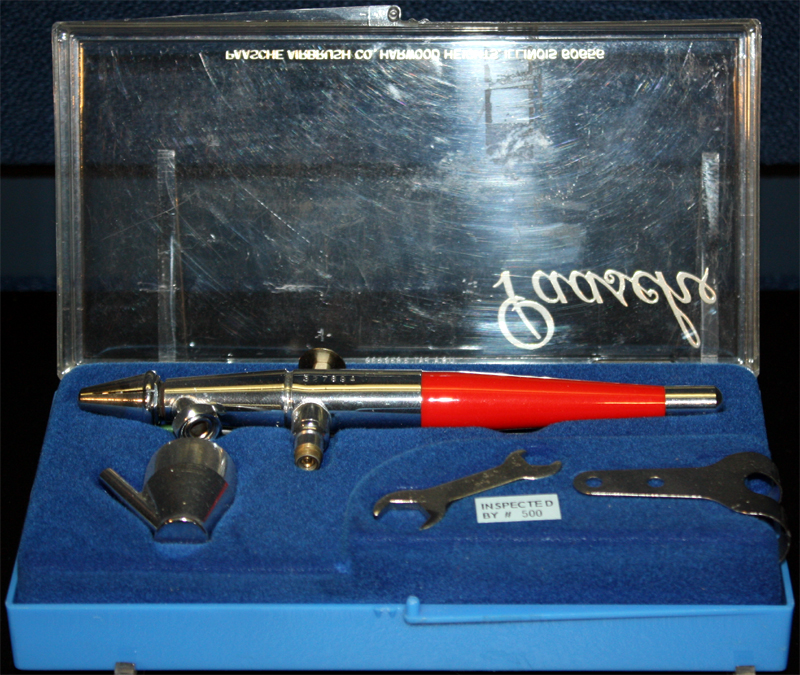
The
Zippo artists used air brush kits like this one on display at the
Zippo / Case Visitors Center.
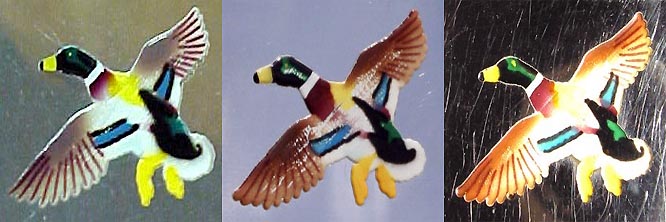
Although showing the same
illustration slight differencens in the overlaying colors can be
found
on each & every artwork for all these designs were
airbrushed by different employed artists.
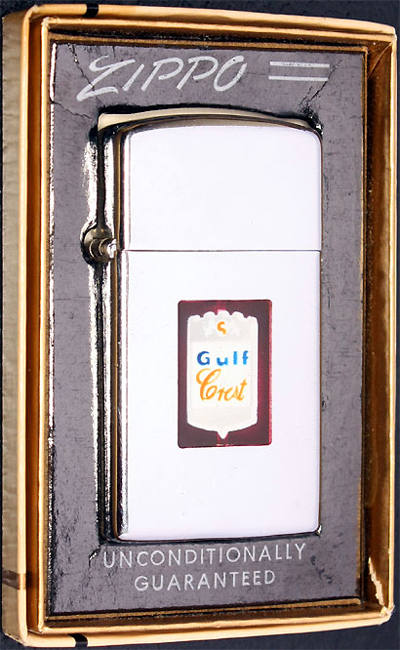
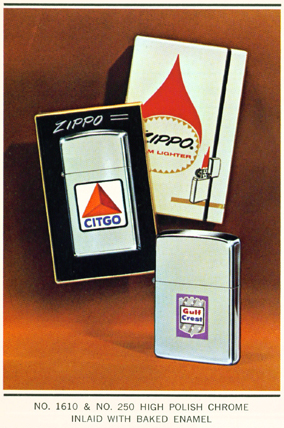
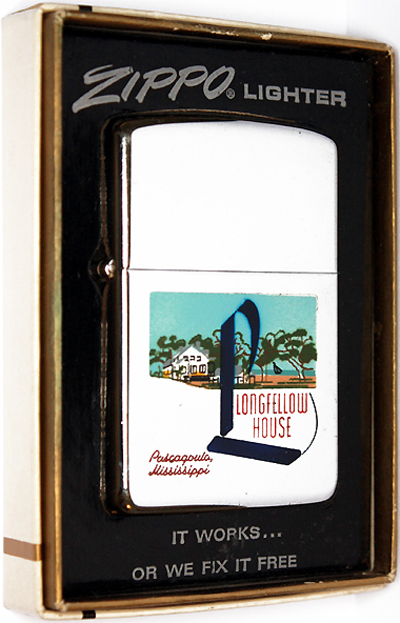
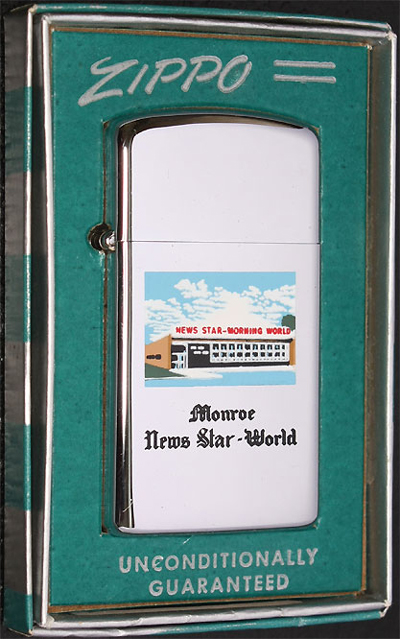
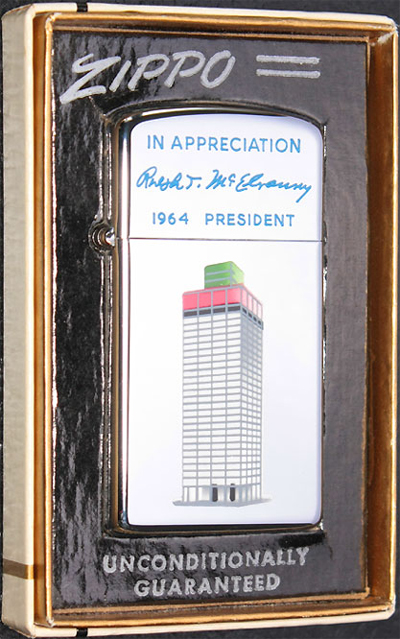
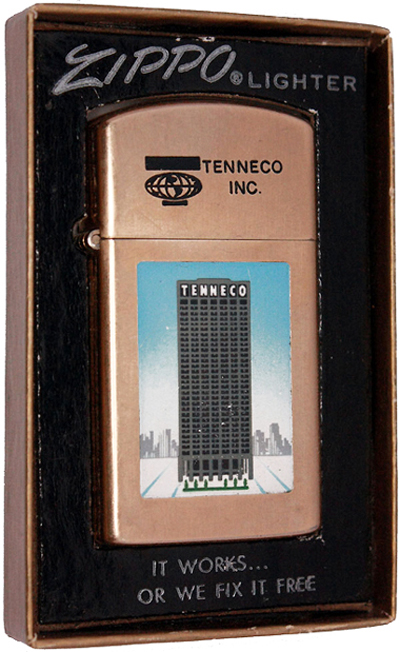
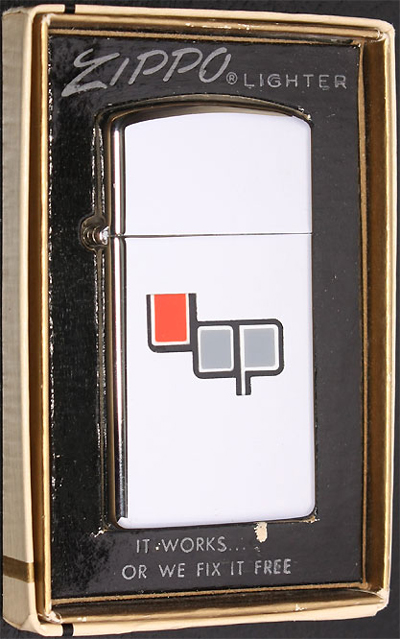
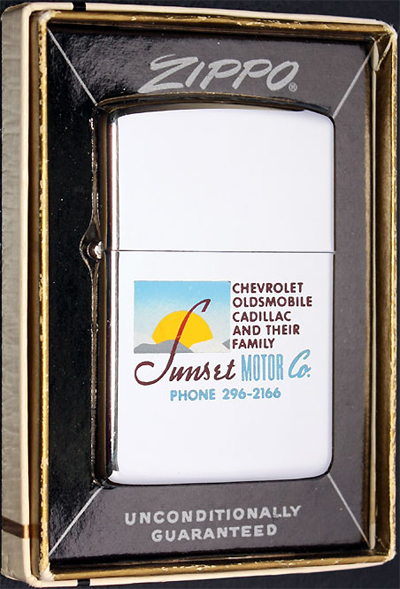
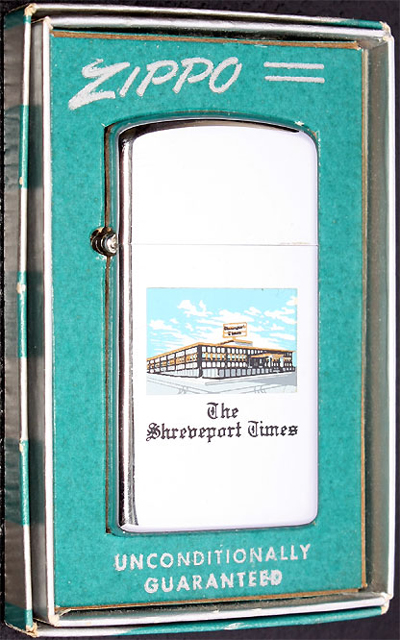
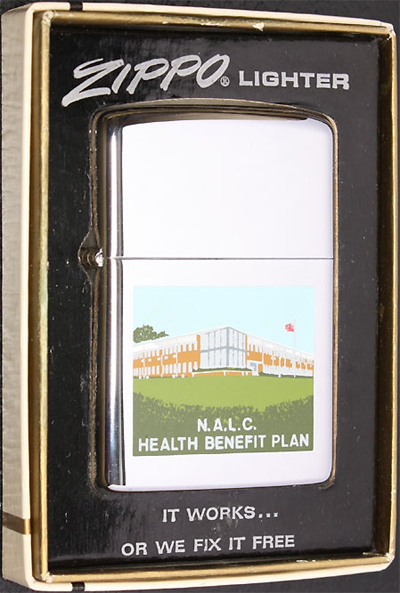
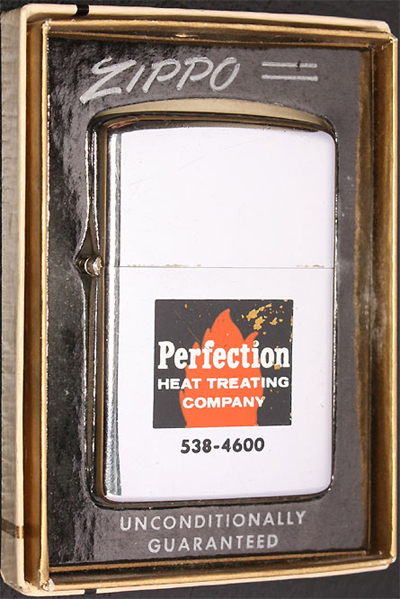
Available for US $7.50 each made a
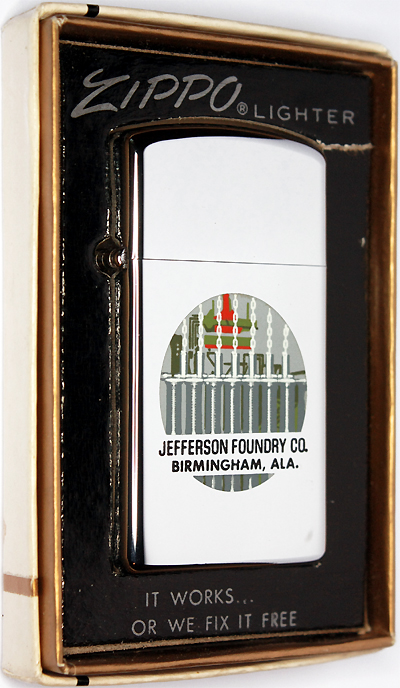
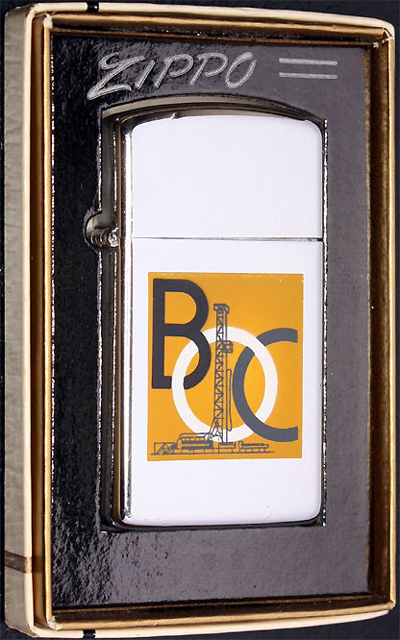
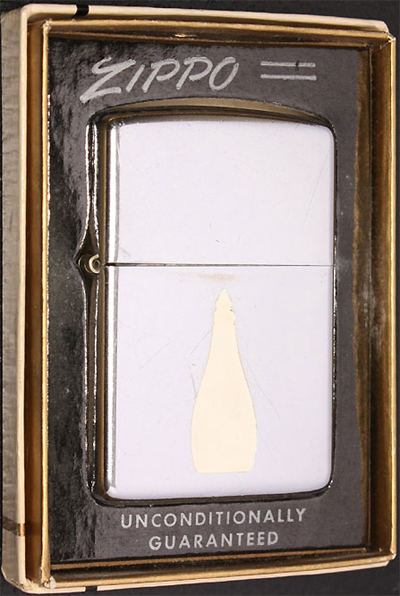
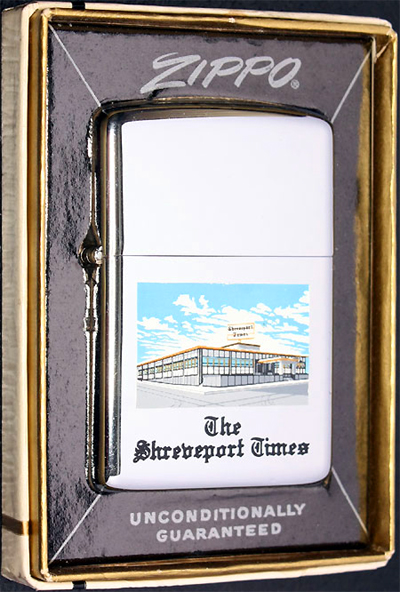
custom order of a minimum of 50 pieces quiet expensive
for a
company or a local business, therefore examples of smaller firms
are hard to find.
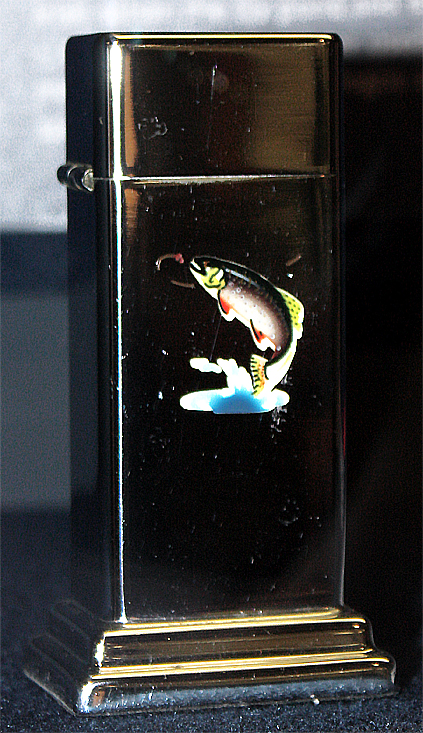
The Barcroft table lighter above is on display at the Zippo /
Case Visitors Center too.
Below some more design variations
that can be found...
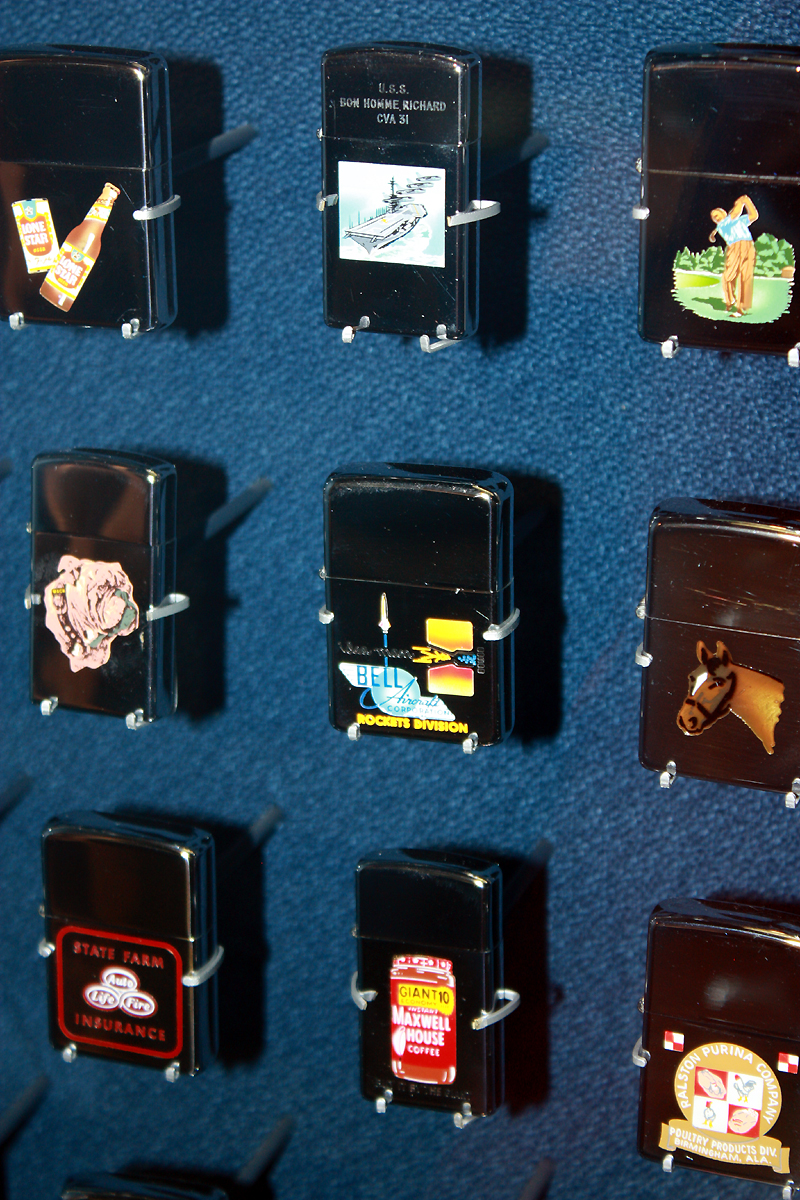
In late 1951 the Lily Pad and the
Geese designs were no longer offered in the nationwide ads,
the price went up to US $8.50 each & the minimum quantity for a
special custom order rose
from 50 to 100 pieces.
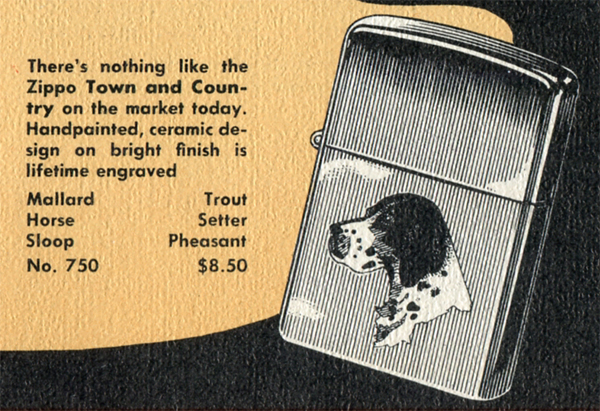
The remaining six models were soon accompanied by the sailfish
design in 1953.
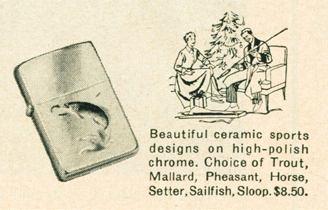
In
1954 the deer was added to the product line, but only three
designs of the original series
were still available: the mallard,
the pheasant and the trout.
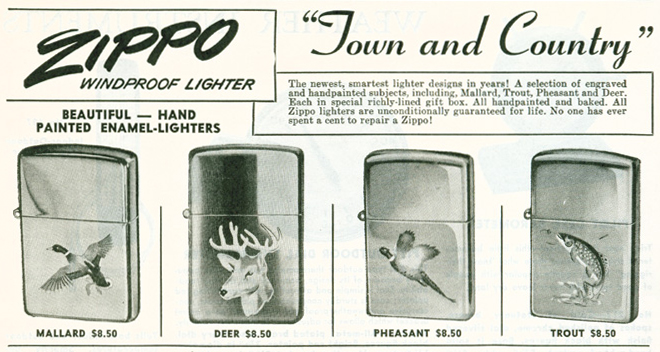
From
1958 to 1960, the last production year of the original town &
country series,
only three designs were offered through the
Zippo Manufacturing Company:
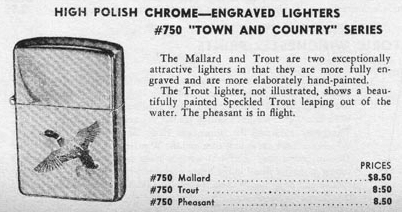
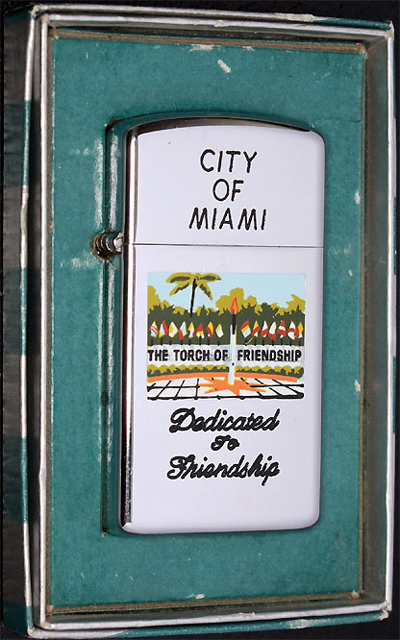
In
addition to the U.S. Navy who ordered several pocket and table
lighters in the 1950's and 1960's,
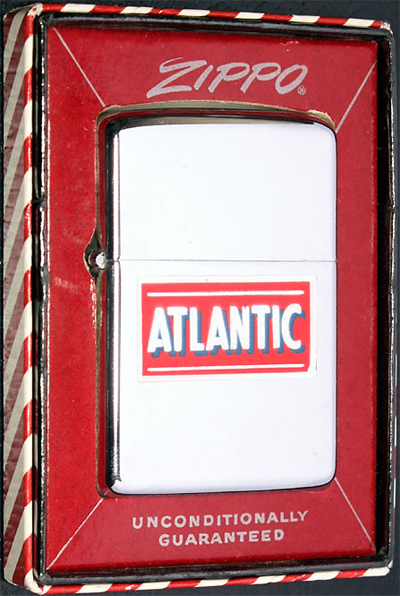
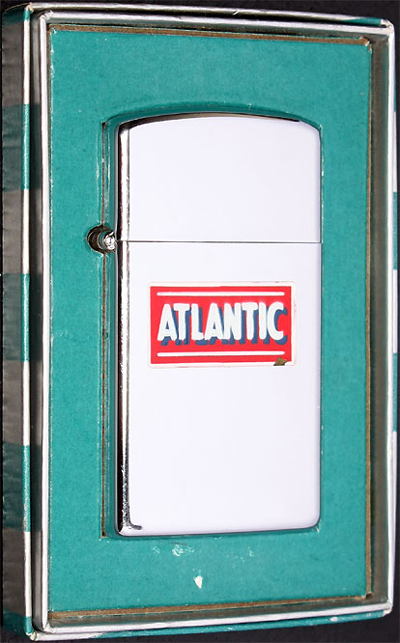
the most known custom designs
around were ordered by the following companies:
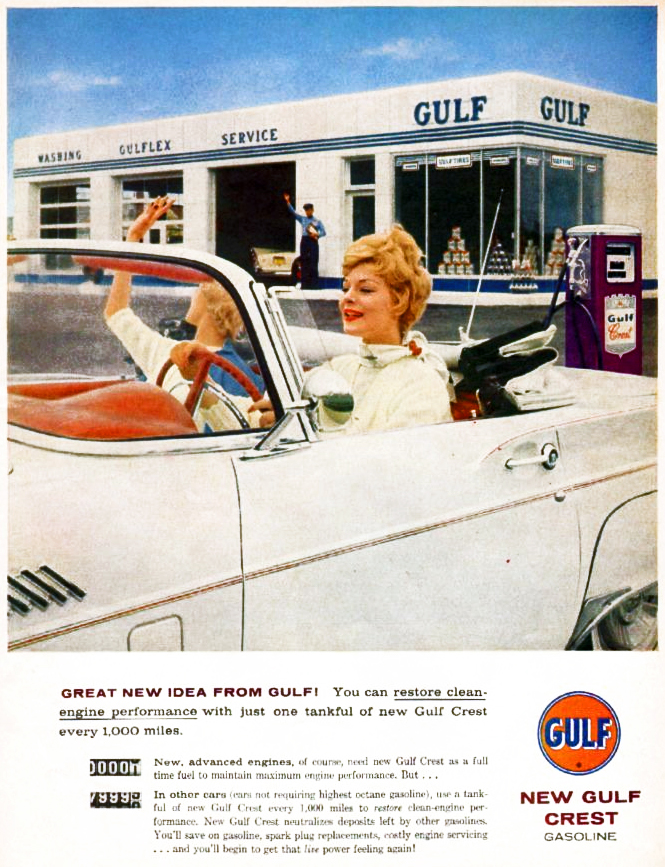
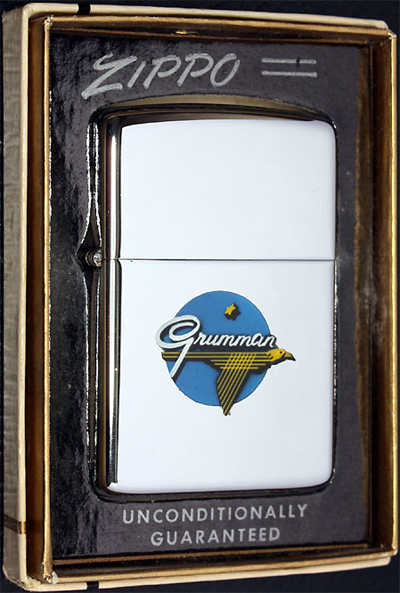
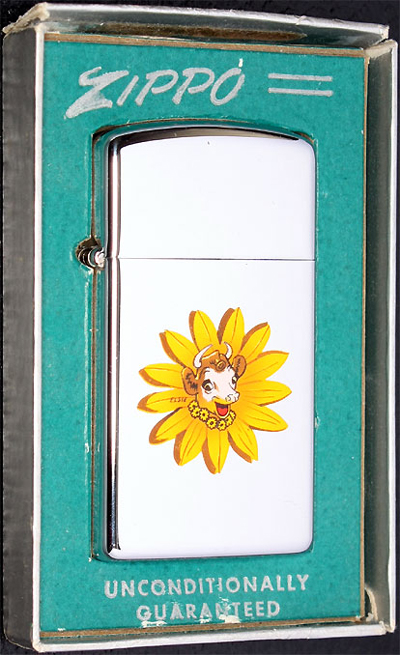
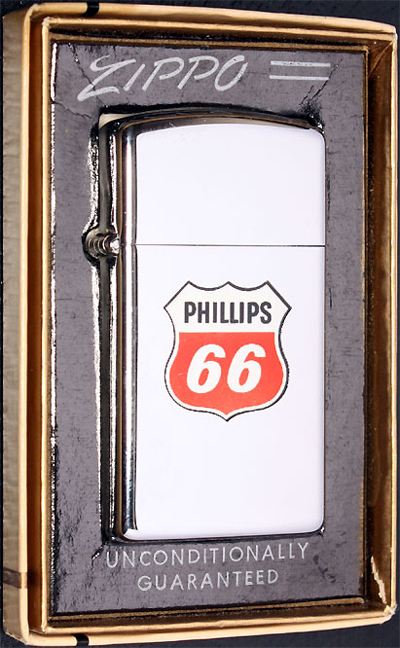
Gulf Oil,
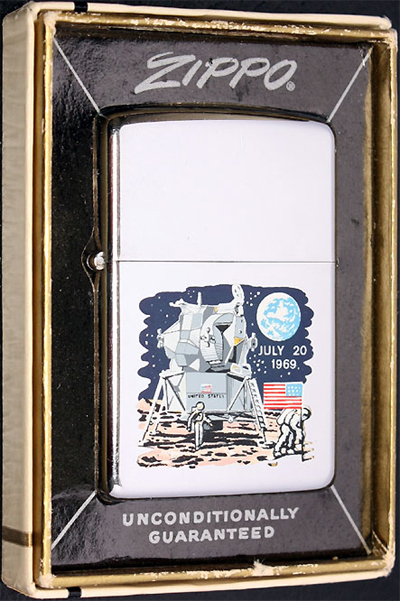
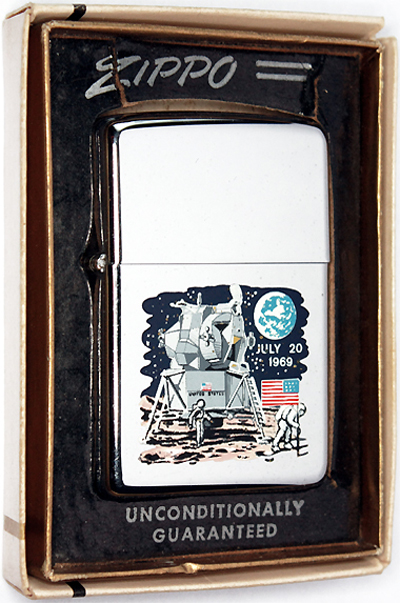
Grumman Aviation, Lockheed, Del Grosso, Chessie Railroad and Borden, and last
but not least the famous moonlanding advertiser from 1969.
Although it has been generally accepted that the Moon Landing
Commemorative lighters were the last to employ the T&C process
this imprinting option was listed in
Zippo's catalogs as late as
the Spring of 1972.
In fact "town & country" was only the
series name of the first eight designs first offered in 1949
but
this is what all electro-baked ceramic enamel processed Zippo lighters
have been called
ever since.
|
|
|
|